
Calcium carbonate
碳酸钙 / Kalziumkarbonat / 탄산칼슘
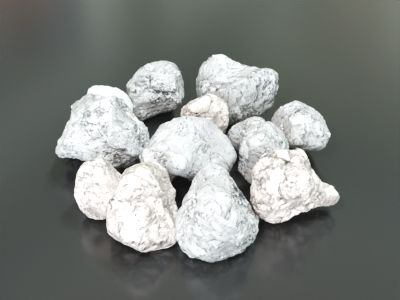
A material primarily composed of calcium carbonate. In nature, it occurs as limestone and as a constituent of eggshells, seashells, and coral. It is available in various particle forms, including powder, granules, and cylindrical shapes.
Applications include fillers for paper, plastics, and coatings, as well as fertilizers, animal feed, cosmetics, and food additives.
Manufacturing process1 (Ground calcium carbonate )
※This process is just one example, and the manufacturing methods vary by company.

If coarse particles are mixed in during grinding, they may adversely affect the downstream processes. Materials used for the parts that come into contact with the raw material during grinding are required to have high wear resistance.

The vertical roller mill "VX Mill" allows grinding and particle size adjustment, by the following characteristics.
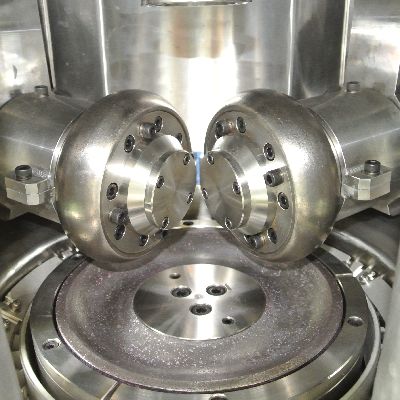
Roller pressure and table speed are adjustable to achieve the target particle size.
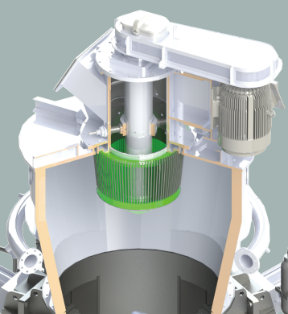
By adjusting the rotational speed of the classifier, the inclusion of coarse particles can be prevented.
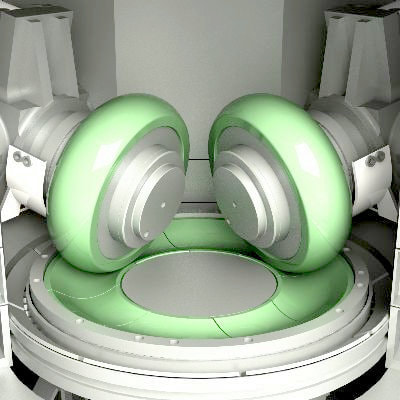
Wear-resistant cast iron is used for the material-contact parts. These components are also easy to replace.
Manufacturing process2 (Precipitated calcium carbonate )
※This process is just one example, and the manufacturing methods vary by company.